
Kai Shimakage and the Northern beaches skate scene
By Matthew Becerra
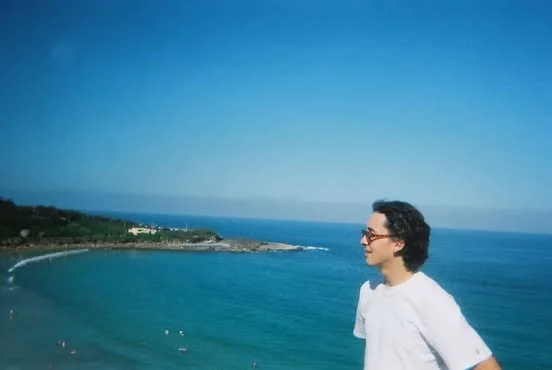
Image courtesy of Shimakage
On Sydney’s Northern Beaches, skateboarding blends naturally into the rhythm of everyday life. boards lean against fences, salty air rolls through the streets, and kids grow up watching people cruise downhill just fast enough to make it look dangerous. For Kai Shimakage, that was all it took.
He didn’t grow up with some grand plan to become a professional skateboarder. He just saw someone flying down a hill near his house and wanted to do the same. Living in a coastal part of Sydney where surf culture and skate culture overlap, skating was always close by, and it didn’t take long before he was pulled into the local scene.
As a kid, it was just about being outside and skating with friends. That changed once a skatepark opened near him and he landed his first shop sponsor around 2019. That was the moment things started to feel real. Having a shop believe in him gave structure to something that had always just been fun, and it pushed him to take skating more seriously.
Now 21, Shimakage is riding for New Balance in Australia, getting Deathwish boards through baker boys distro, and filming for Volcom.
Even with those opportunities, he’s quick to point out how different the grind looks in Australia compared to the U.S.
“In Australia, most people work during the week, so the only real time to go street skating is Saturday and Sunday,” he said. “In L.A., people are skating every day.”
That difference shapes everything, how often people film, how quickly parts come together, and how fast momentum can build. In Sydney, weekend missions are the norm, and those sessions often feel more like hangouts than strict filming days. Friends bring beers, skate a few spots, and make the most of limited time together. It’s a tight-knit scene where everyone knows each other, and while there’s the occasional tension between groups, the overall vibe stays mellow and supportive.
That closeness also means that standing out takes patience. Australian skaters often have to prove themselves locally before even getting a chance to be noticed internationally, and once they do make it to the States, the process starts all over again.
“You make it in Australia, then you go to the U.S. and you’re back at the bottom,” Shimakage said. “It’s kind of weird, but that’s just how it is when you’re so far away.”
Still, the internet has helped shrink that distance. Clips travel faster now, and team managers can follow skaters across the world without ever meeting them in person. That visibility helped Shimakage get on New Balance in 2021, where he started on flow and slowly worked his way into a more solid position. He also linked up with Volcom after skating a demo that turned into an unexpected opportunity, earning him a place on a roster stacked with established names.
He’s currently filming for an upcoming Volcom video, where he’ll have a solid portion, even if not a full part. Any leftover footage may end up in a Sunday Hardware project, and beyond that, he’s hoping to put together a solo part of his own in the near future.
When it comes to actually skating spots and choosing tricks, Shimakage doesn’t follow a strict plan. In fact, he avoids planning as much as possible.
He prefers showing up to a spot and reacting to what feels right in the moment. Overthinking, he says, is what gets him stuck. Instead, he trusts instinct and lets the session guide the clip, even if that means battling a trick all day or switching ideas entirely.
That spontaneous approach matches the way he talks about skating in general — less about strategy, more about staying excited.
Trips to the U.S. have played a big role in that motivation. Shimakage has visited twice, and each time he returns to Australia with a new sense of urgency. Seeing skaters he grew up watching in videos, skating the same streets he only knew from parts, flips a switch.
“Every time I come back, I’m way more hyped to skate,” he said. “You see how good everyone is over there and you’re like, yeah, I need to step it up.”
That energy is hard to keep year-round when real life gets in the way. Like most skaters in Australia, he balances work with skating, squeezing sessions in when he can. But those U.S. trips remind him what’s possible and why he started chasing this in the first place.
Looking ahead, Shimakage’s goals are simple but serious: keep filming, keep skating, and get back to the States sooner rather than later. Friends have already told him that if he wants to really push his career, he needs to be there more often. Money is the main obstacle, but the plan is forming.
For now, though, he’s still rooted in Australia — skating weekends, filming when he can, and building toward something bigger. He knows the road from Sydney to the global skate industry isn’t short or easy, but he’s not rushing it either.
From beach mornings to late-night sessions, Shimakage is taking the long way if that’s what it takes. Not because he’s chasing fame, but because every trip, every clip and every small opportunity keeps lighting that same fire that started when he first saw someone fly down a hill and thought, I want to do that.
